
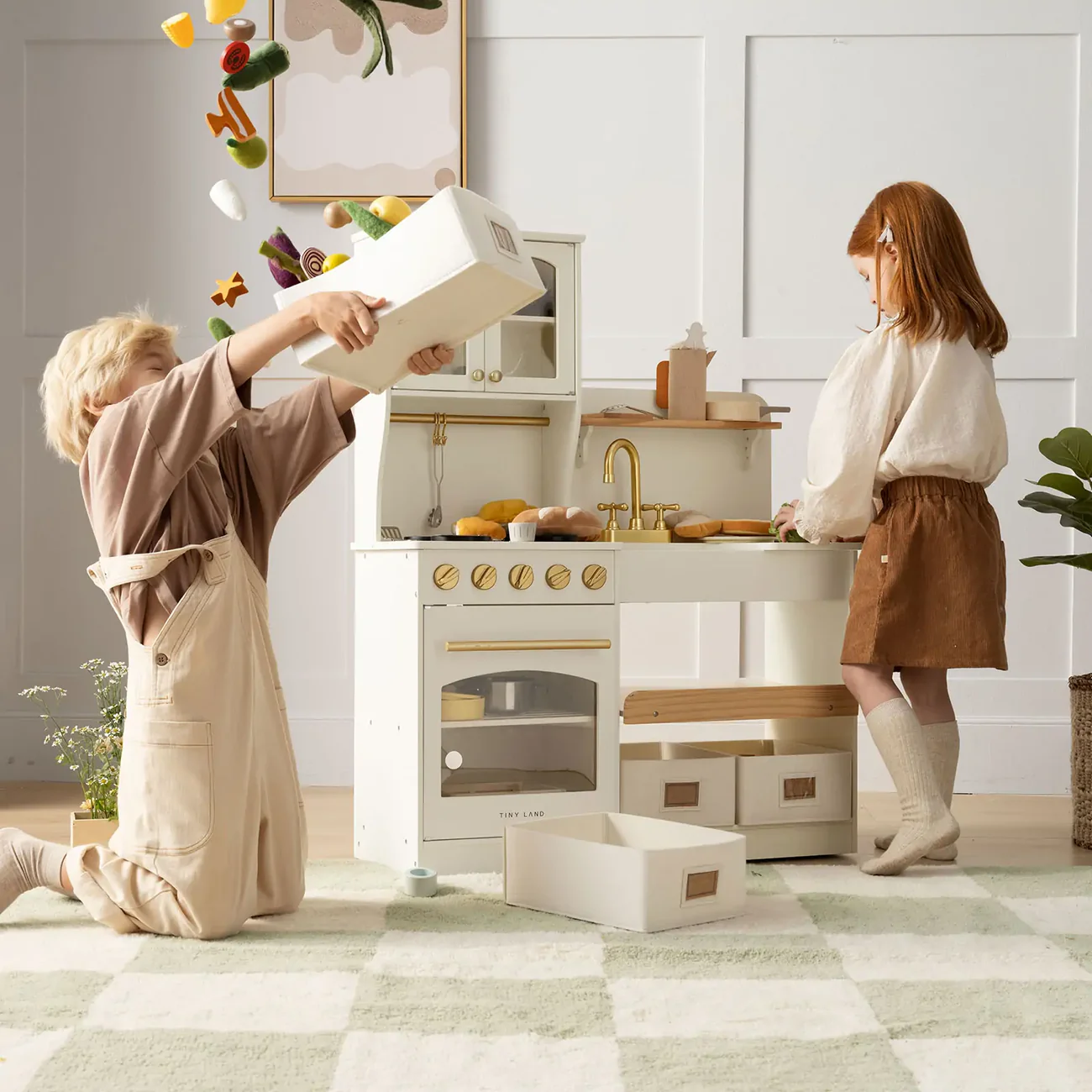
Creating a play kitchen in a small indoor space can be both a fun and practical way to encourage imaginative play without overwhelming your living area. When space is limited, thoughtful planning and clever use of available corners or nooks become essential. The key is to maximize functionality while maintaining an organized and clutter-free environment.
One effective approach is to choose compact or modular play kitchens designed specifically for small spaces. These units often feature foldable components or stackable elements that allow you to customize the setup according to your room’s dimensions. For example, a fold-down countertop can provide additional workspace when needed but neatly tucks away afterward, freeing up floor space. Modular pieces also enable you to add or remove sections as your child grows or as storage needs change.
Another solution involves utilizing vertical space efficiently. Wall-mounted shelves above the play kitchen can hold toy utensils, pots, pans, and pretend food items within easy reach of the floor. Magnetic strips attached near the cooking area are perfect for hanging metal accessories like spoons and spatulas, keeping them organized and accessible without taking up counter space. Pegboards are also versatile options that can be customized with hooks and baskets tailored for various toys.
Incorporating multifunctional furniture into the design helps save room too. A bench with hidden storage underneath not only offers seating but also keeps extra toys out of sight when they’re not in use. Small rolling carts work well as mobile storage units that can be moved around depending on where your child wants to play; these carts double as surfaces for additional prep areas during imaginative cooking sessions.
Choosing light colors and minimalist designs contributes visually by making the area feel more open rather than cramped. Clear containers or labeled bins keep smaller items tidy while allowing children to easily find what they need without creating chaos.
Finally, consider positioning the play kitchen near natural light sources such as windows if possible-this brightens up the corner and makes it inviting without requiring bulky lighting fixtures that consume valuable wall or ceiling space.
By combining compact furniture, smart storage solutions, vertical organization techniques, and aesthetic considerations suited for tight quarters, fitting a functional and enjoyable play kitchen indoors becomes achievable even in small homes or apartments. This thoughtful integration encourages creativity while maintaining harmony within limited living environments.